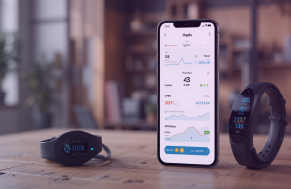
The 2026 CCM Playbook: CPT Codes, Real Revenue Math, and Where CFOs Lose Margin
Chronic Care Management (CCM)

The 2026 CCM Playbook: CPT Codes, Real Revenue Math, and Where CFOs Lose Margin

Abhinav Mohite
Healthcare Business Analyst & SME
Table of Content

TL;DR:

CCM coding in 2026 is not about new CPT codes. It is about executing existing rules with precision while payment rates tighten and audit scrutiny remains high. The core CCM codes stay the same, but revenue math has shifted. 99490 now averages $58, 99439 $44, and 99487 $126 per patient per month (2026 PFS estimates). At scale, small missteps in time capture or code selection translate into meaningful revenue leakage or recoupment risk.

This guide breaks down every CCM CPT variant, including staff-time, physician-time, and complex CCM, and shows how time thresholds, supervision, and medical decision-making determine which code applies. Real claims examples highlight where payers pay cleanly and where they push back, especially around concurrency with TCM, RPM, and RTM.

For CFOs, the takeaway is clear. CCM remains a predictable recurring revenue stream, but only when add-on minutes are consistently captured and high-acuity patients are coded correctly. For CTOs, CCM is a systems problem. Eligibility checks, consent, time tracking, and concurrency rules must live inside EHR logic, not staff memory.

The blog also reflects the extended RHC/FQHC transition deadline of September 30, 2026, giving organizations time to move from G0511 to individual CPT codes without cash flow disruption.

    Are you confident your CCM program is using the right CPT code mix in 2026, or are you quietly leaking $66.30 to $117-$134 per patient per month while increasing audit risk?

    Chronic Care Management remains one of the most predictable reimbursement streams in value-based care. But predictability only holds when coding precision matches CMS rules. In 2026, the CCM code set is stable, yet payment rates, RHC/FQHC timelines, and concurrency enforcement make small operational errors expensive. Pick the wrong code lane, miss a time threshold, or overlap CCM with TCM, and finance sees denials while compliance sees exposure.

    For CFOs and CTOs, the problem is not a lack of awareness. It is execution. Coding teams must distinguish between staff-time CCM, physician-time CCM, and complex CCM. Technology teams must ensure the EHR captures time, consent, care plans, and supervision requirements without relying on staff memory. Miss either layer, and you lose revenue or face post-payment clawbacks.

    This guide breaks down the 2026 CCM codes in plain terms. It compares every CPT variant, shows how real claims are adjudicated, and provides a practical selection algorithm you can embed directly into workflows. We also quantify updated 2026 revenue math and clarify the extended RHC/FQHC transition deadline, so leadership teams can forecast accurately and stay audit-ready.

    I. CCM in 2026: What Changed and What Didn’t

    A. CCM vs Complex CCM vs Physician-Time CCM

    Chronic Care Management still operates in three clearly defined lanes. The codes are unchanged. The risk comes from choosing the wrong one.

    1. Non-complex CCM (99490, 99439)
      This is staff-driven care management. Clinical staff provide at least 20 minutes per month under general supervision. It remains the most common CCM entry point and the most frequently undercoded when add-on time is not captured.
    2. Complex CCM (99487, 99489)
      This lane applies when staff provide 60 minutes or more, and the care requires moderate to high medical decision-making. The time threshold alone is not enough. Without explicit MDM documentation, these claims are vulnerable to audit.
    3. Physician or QHP-time CCM (99491, 99437)
      These codes apply when the physician or qualified health professional personally performs the care management work. Staff minutes do not count. These codes carry a higher value but also higher scrutiny, because payers expect clear proof of provider involvement.

    Time, complexity, and who delivered the care matter equally. If any one of those elements is misclassified, the claim fails.

    B. 2026 Policy Rules That Still Drive Code Choice

    While CMS did not introduce new CCM codes for 2026, enforcement around existing rules remains strict.

    • Concurrency rules
      1.  Non-complex CCM and complex CCM cannot be billed for the same patient in the same month.
      2. CCM and TCM may only be billed together if their service periods do not overlap.
      3. CCM may be combined with either RPM or RTM, but not both at the same time.
    • Initiating visit requirement
      Before the first CCM claim, the patient must have an annual wellness visit, a comprehensive E/M visit, or a TCM visit. Consent and a documented care plan must originate from this encounter.
    • G0506 add-on
      When the billing provider personally performs extensive care planning at the initiating visit, G0506 may be billed. It remains optional, but valuable for complex patients.

    Most CCM denials are not about eligibility. They are about overlapping dates, missing consent, or insufficient documentation tied to the initiating visit.

    C. RHC/FQHC Update for 2026 (Deadline Extended)

    For rural and safety-net providers, the transition timeline is now clearer.

    • Through September 30, 2026:
      RHCs and FQHCs may continue billing the general care management code G0511.
    • After September 30, 2026:
      Clinics must transition to individual CCM CPT codes such as 99490, 99439, 99487, and 99489.

    This shift moves reimbursement away from a flat rate and toward time- and complexity-based billing.
    Clinics that delay EHR changes, coder retraining, or time-tracking workflows until late 2026 risk cash flow disruption during the transition.

    II. Side-by-Side CCM CPT Codes

    Time • Supervision • Who Can Bill • Documentation Keys

    For CTOs and CFOs, this section is the control panel. Every denial, audit request, or revenue shortfall usually traces back to one of these distinctions being missed in workflow design.

    A. Non-Complex CCM by Clinical Staff

    Codes: 99490 (first 20 minutes), 99439 (each additional 20 minutes)

    • Time threshold
    1. Minimum 20 minutes per calendar month for 99490
    2. Each additional 20-minute increment captured with 99439
    3. Time must be cumulative and tied to care management activities
    • Supervision
    1. General supervision
    2. Billing provider oversees care but does not need to be present
    • Who can bill
    1. MD, DO, NP, PA, CNS, or CNM
    2. Only one practitioner per patient per month
    • Documentation keys
    1. Active care plan maintained in a certified EHR
    2. Patient consent documented
    3. Detailed staff time logs linked to care activities
    4. Evidence of 24/7 access to clinical staff

    Finance note: This is the most common CCM code family and the most under-monetized. Missed 99439 add-ons quietly erode margins at scale.

    B. Physician or QHP-Time CCM

    Codes: 99491 (first 30 minutes), 99437 (each additional 30 minutes)

      1. Time threshold
        Minimum 30 minutes personally performed by the physician or QHP
        Staff time does not count
      2. Supervision
        Not applicable, since the billing provider performs the service
      3. Who can billOnly the physician or QHP who personally delivered the care
      4. Documentation keys

        • Explicit provider time tracking
        • Notes must reflect direct physician/QHP involvement
        • Clear separation from staff-driven activities

    B. Physician or QHP-Time CCM

    1. Codes: 99491 (first 30 minutes) and 99437 (each additional 30 minutes).
    2. Time Requirement: At least 30 minutes personally spent by the physician or QHP. Staff minutes cannot be counted.
    3. Supervision Level: Not applicable since the billing provider performs the service directly.
    4. Who Can Bill: Only the physician or QHP who personally provides the service.
    5. Documentation Keys:
      • Specific activities performed by the provider must be logged, along with the time spent.
      • Care plan elements updated during physician involvement must be recorded.
      • Patient contact and care management tasks must reflect personal involvement.

    Audit lens: These codes pay more because they assume provider effort. Any ambiguity between staff and provider work invites scrutiny.

    C. Complex CCM by Clinical Staff

    1. Codes: 99487 (first 60 minutes) and 99489 (each additional 30 minutes).
    2. Time Requirement: Minimum of 60 minutes of clinical staff time per month. Additional increments of 30 minutes are billed under 99489.
    3. Supervision Level: General supervision.
    4. Who Can Bill: MD, DO, NP, PA, CNS, or CNM
    5. Documentation Keys:
      • Moderate or high medical decision-making is explicitly documented
      • Coordination among multiple providers
      • Medication reconciliation and adherence checks
      • Care plan updates reflecting patient complexity

    Compliance reality: Time alone does not justify complex CCM. Without documented MDM, these claims fail in review.

    D. Initiation and Care-Planning Add-On

    Code: G0506.

    • When it applies
      At the initiating visit, when the billing provider personally performs extensive care planning
    • Documentation keys
      1. Comprehensive care plan details
      2. CCM consent captured
      3. CEHRT linkage

    Strategic use: Optional, but valuable for complex patients where upfront planning time is significant.

    E. Programs Commonly Confused With CCM

    • Principal Care Management (PCM, 99424–99427)
      1. Single chronic condition, expected to last at least three months
      2. Not interchangeable with CCM, which requires two or more conditions
      • Transitional Care Management (TCM, 99495–99496)
        1. Covers the 30-day post-discharge period
        2. May be billed in the same month as CCM only if service periods do not overlap

        CTO takeaway: These distinctions must live in logic, not training decks. If your EHR cannot enforce them automatically, your revenue depends on memory.

        Your CCM Strategy Deserves More Than Guesswork

        Our team has helped hospital networks and digital health startups design scalable, compliant CCM workflows that cut audit risk and drive measurable growth.

        III. Real Claims Examples (What Actually Gets Paid in 2026)

        Rules look clean on paper. Claims do not. This section shows how CCM CPT codes behave once they hit payer systems and where teams either protect revenue or create risk.

        A. Family Medicine Example: 99490 + 99439

        1. Patient Profile: 72-year-old patient with diabetes and congestive heart failure.
        2. Workflow: A nurse care manager logged 32 minutes across the month. Activities included medication reconciliation, scheduling specialty follow-ups, and weekly outreach calls.
        3. Claim Submission:
          • 99490 for the first 20 minutes
          • 99439 for the additional time (rounded to a full 20-minute increment)
        4. Remittance Outcome: Both line items were paid. Total reimbursement exceeded the base CCM rate.
        5. Audit Note: Time logs were linked directly to the care plan. The EHR produced a clean activity trail, which is exactly what auditors expect to see.

        Why this matters:
        Most practices stop at 99490 even when the time exceeds 20 minutes. That hesitation leaves money on the table every month.

        B. Complex CCM Example: 99487 + 99489

        1. Patient Profile: 65-year-old patient with COPD, diabetes, and hypertension.
        2. Workflow: Clinical staff recorded 92 minutes coordinating care among a pulmonologist, PCP, and pharmacist. Medication changes followed a recent hospitalisation.
        3. Claim Submission:
          • 99487 for the first 60 minutes.
          • 99489 for the additional 32 minutes.
        4. Remittance Outcome: Claim paid in full at complex CCM rates.
        5. Audit Note: The provider explicitly documented moderate complexity medical decision-making and inter-provider communication. Without that MDM language, the claim would likely have been downgraded or denied.
        6. Compliance lesson: Time alone does not protect complex CCM claims. Decision-making does.

        C. Physician-Time CCM Example: 99491 + 99437

        1. Patient Profile: 77-year-old patient with advanced Parkinson’s disease requiring frequent medication adjustments.
        2. Workflow: The physician personally spent 65 minutes across the month managing care, including direct patient calls and care plan revisions.
        3. Claim Submission:
          • 99491 for the first 30 minutes
          • 99437 for the additional 35 minutes
        4. Remittance Outcome: Claim accepted at physician-time rates.
        5. Audit Note: Documentation clearly separated physician work from staff activities. Staff time was excluded, protecting the claim from recoupment.
        6. Finance takeaway:
          Physician-time CCM supports high-acuity care, but only when time attribution is clean.

        D. TCM Handoff to CCM Within the Same Month

        1. Patient Profile: 68-year-old patient discharged after heart failure exacerbation.
        2. Workflow:
          • TCM services are billed for the first 30 days post-discharge
          • CCM activities began after day 30, with 25 minutes logged
        3. Claim Submission:
          • 99495 for TCM
          • 99490 for CCM after the TCM period ended
        4. Remittance Outcome: Both claims were paid.
        5. Audit Note: The EHR blocked CCM time logging during the TCM window, preventing overlap.
        6. Risk avoided: Overlapping service dates are one of the fastest ways to trigger denials.

        E. RHC/FQHC Transition Example (2026 Timeline Applied)

        1. Patient Profile: A 70-year-old patient was treated at a rural health clinic.
        2. Workflow: Clinical staff provided 42 minutes of CCM services.
        3. Claim Logic:
          Before September 30, 2026: G0511 used for general care management
          After transition: 99490 + 99439 used to reflect actual time
        4. Remittance outcome: Reimbursement remained stable, with improved flexibility once add-on codes were used.
        5. Operational lesson: Clinics that train coders and adjust workflows ahead of the deadline avoid revenue disruption during the transition.

        📌 Key Insight:
        In 2026, payers reward precision. Claims fail most often when staff minutes are double-counted, when CCM overlaps with TCM, or when complexity is asserted without decision-making evidence.

        IV. Selecting the Right CCM Code: A Practical 2026 Algorithm

        Most CCM errors are not knowledge gaps. They are decision failures at the point of care. This algorithm turns policy into a repeatable process your teams and systems can follow every month.


        CCM Code

        A. Step 1: Confirm Patient Eligibility and Initiating Visit

        Before any CCM time is logged, confirm the foundation is in place.

        1. The patient has two or more chronic conditions expected to last at least 12 months or until death.
        2. The conditions place the patient at significant risk of death, acute exacerbation, or functional decline.
        3. An initiating visit has occurred. This may be an annual wellness visit, a comprehensive E/M visit, or a transitional care management visit.
        4. Patient consent is documented in the certified EHR.
        5. A care plan is created and stored in CEHRT.

        Control point: If any of these elements are missing, CCM should not be billed. Systems should block time capture until the task is complete.

        B. Step 2: Choose the Care Delivery Lane

        Once eligibility is confirmed, identify who delivered the majority of the work.

        1. Staff-Time CCM (99490, 99439): Select this lane when clinical staff perform most of the care management under general supervision.
        2. Physician/QHP-Time CCM (99491, 99437): Use this lane only when the physician or QHP personally provides at least 30 minutes of care. Staff minutes must be excluded.
        3. Complex CCM (99487, 99489): Choose this lane when staff provide at least 60 minutes, and the care involves moderate or high medical decision-making

        Execution risk: Mixing lanes within the same month leads to denials.

        C. Step 3: Apply Time Thresholds and Add-On Codes

        1. 99490: First 20 minutes of staff timee.
        2. 99439: Each additional 20 minutes of staff time.
        3. 99491: First 30 minutes of physician/QHP time
        4. 99437: Each additional 30 minutes of physician/QHP time
        5. 99487: First 60 minutes of complex CCM.
        6. 99489: Each additional 30 minutes of complex CCM.
        7. G0506: Optional add-on at the initiating visit for extensive provider-led care planning.

        If the minimum time threshold is not met, the code should not be billed.

        D. Step 4: Check Concurrency and Conflicts

        Before finalising the claim, confirm there are no overlaps.

        1. Non-complex CCM and complex CCM cannot be billed in the same month.
        2. CCM and TCM may only be billed together if the service periods do not overlap.
        3. CCM may be paired with either RPM or RTM, but not both.
        4. Only one practitioner may bill CCM for a patient per month.

        System requirements: These checks should be automated, not manual.

        E. Step 5: Apply Special Setting Rules (2026)

        • Rural Health Clinics and Federally Qualified Health Centers:
          1. May continue billing G0511 through September 30, 2026.
          2. After that date, they must transition to individual CCM CPT codes.
        • Specialty Practices: Principal Care Management may be more appropriate when only one chronic condition is being managed.

        F. Output: The Decision Tree

        When embedded in an EHR, this logic becomes a decision tree:

        1. Is the patient eligible and consented?
        2. Was an initiating visit completed?
        3. Who delivered the care: staff or provider?
        4. How much time was logged?
        5. Any overlapping services?
        6. Any special setting rules?

        Result: The correct CCM CPT code is selected automatically, reducing denials and underbilling.

        Stop Losing CCM Revenue to Coding Complexity

        Mindbowser helps you translate real-world workflows into automated, audit-ready billing logic inside your EHR — so every minute counts and every claim gets paid.

        V. EHR Prompts That Reduce Errors and Denials (2026 Execution Layer)

        Most CCM revenue losses do not result from misunderstanding the rules. It comes from relying on people to remember them. In 2026, high-performing organizations hardwire CCM compliance into the EHR so errors never reach billing.

        A. Pre-Billing Guardrails

        1. Initiating Visit Check
          Before any CCM claim is generated, the EHR should confirm that an initiating visit exists. Acceptable encounters include an annual wellness visit, a comprehensive E/M visit, or a TCM visit.

          • If no initiating visit is on file, the claim submission should be blocked.
          • This control alone eliminates one of the most common audit findings.
        2. Consent Verification
          Consent must be documented prior to initiating CCM billing.

          • Use a structured consent field tied to the patient record.
          • Billing logic should remain locked until consent is captured.
        3. Certified EHR Documentation
          Care plans must live in certified EHR technology.

          • Prompts should require documentation of diagnoses, goals, medications, involved providers, and follow-up cadence.
          • Free-text care plans increase audit risk.

        B. Time and Complexity Controls

        1. Separate Time Counters”
          The EHR should track staff time and physician/QHP time independently.

          • At 20 minutes, prompt for 99490.
          • At 40 minutes, prompt for 99439.
          • At 60 minutes with documented MDM, prompt for 99487.
          • Physician/QHP time should trigger 99491 only when provider minutes reach 30.
        2. Complexity Documentation
          For complex CCM, time alone is insufficient.

          • The system should require explicit documentation of moderate or high medical decision-making.
          • Templates should guide providers to document problem complexity, medication changes, and coordination with other clinicians.

        Audit protection: If complexity fields are incomplete, the claim should not advance. If complexity fields are incomplete, the claim should not advance.

        C. Concurrency Enforcement

        1. TCM Overlap Alerts
          If a TCM claim is active within 30 days of discharge:

          • CCM time entry should be disabled during the overlap period.
          • CCM logging should reopen automatically after day 30.
        2. RPM and RTM Exclusivity
          When remote monitoring codes are active:

          • The EHR should prompt users to confirm that CCM is paired with either RPM or RTM, not both.
        3. Duplicate Practitioner Warnings
          If another practitioner has already billed CCM for the patient in the same month:

          • The system should flag the conflict before submission.

        D. Scaling With Mindbowser Accelerators

        Mindbowser operationalizes these controls with accelerators built for CCM scale:

        • AI Medical Summary pre-populates care plans from existing records, reducing manual chart review.
        • CarePlan AI enforces version control and structured documentation aligned to audit standards.
        • RPMCheck AI Validates CCM, RPM, and RTM combinations to prevent concurrency violations.
        • HealthConnect CoPilot embeds prompts directly into Epic, Cerner, Athena, and other major EHRs using FHIR and HL7.

        All activity logs are immutable and support HIPAA, SOC 2, and 42 CFR Part 2 requirements.

        📌 Key Insight: In 2026, compliance that lives in training decks fails. Compliance that lives in software scales.

        VI. Financial Impact Snapshot for CFOs

        For finance leaders, CCM is not a compliance exercise. It is a recurring revenue line that lives or dies by code mix discipline and time capture accuracy. In 2026, payment compression makes precision more important, not less.

        2026 rate note: The figures below reflect estimated 2026 PFS averages. Final reimbursement varies by geography and payer. CFOs should validate against their MAC fee schedule before forecasting.

        CCM Codes

        A. Monthly Revenue Ladders by CCM Code Mix

        Staff-Time CCM (99490 + 99439)

        1. 99490: approximately $66.30 per patient per month (2026 est.)
        2. 99439: approximately $44 per additional 20 minutes (2026 est.)

        A panel of 500 eligible patients, with a 40% enrollment rate, can still generate steady monthly revenue at the base threshold. The margin expansion comes from consistency. Capturing even one additional 99439 for every 10 enrolled patients materially changes the annual forecast.

        CFO lens: Lost add-on minutes do not show up as denials. They show up as silent underbilling.

        Physician-Time CCM (99491 + 99437)

        • Higher reimbursement per unit because only the physician’s or QHP time qualifies
        • Typically applied to high-acuity panels where provider involvement is unavoidable

        In practice, 100 patients billed under physician-time CCM can generate revenue comparable to 300–400 patients billed under staff-time CCM, assuming clean documentation.

        Risk tradeoff: These codes pay more, but payer scrutiny is higher. Provider time attribution must be airtight.

        Complex CCM (99487 + 99489)

        • 99487: approximately $117-$134 for the first 60 minutes (2026 est.) (10% CCM rate increase per CMS Final Rule)
        • 99489: additional 30-minute increments, rate stable

        Organizations that consistently document moderate or high medical decision-making capture 25–40% more CCM revenue than those defaulting to non-complex CCM for similar patient populations.

        Finance reality: Complex CCM is where high-acuity populations become financially sustainable, not where shortcuts are tolerated.

        B. RHC/FQHC Transition Economics (2026 Timeline)

        1. Through September 30, 2026: RHCs and FQHCs may continue using G0511, which pays a flat rate regardless of time or complexity.
        2. After September 30, 2026: Clinics must bill individual CPT codes such as 99490, 99439, 99487, and 99489.
        3. Economic Shift:
          • G0511 simplifies billing but caps upside.
          • Post-transition CPT billing rewards accurate time capture and documentation of complexity.
          • Clinics with disciplined workflows can see 15–25% revenue uplift without increasing patient volume.
        4. Budget implication: Training, EHR reconfiguration, and time-tracking controls are not optional line items in 2026 planning.

        C. Staffing Model Tips for Sustainable ROI

        1. Panel Sizing
          • One full-time care manager can typically manage 150–200 non-complex CCM patients.
          • Complex CCM lowers panel size but increases per-patient revenue.
        2. Time Capture Discipline
          • Real-time EHR counters prevent missed minutes.
          • One extra 99439 per care manager per day compounds into meaningful annual revenue.
        3. Audit-Ready Documentation
          • Consent, care plans, activity logs, and time attribution must support every billed code.
          • Recoupments erase margin faster than rate cuts.

        📌 Key Insight: In 2026, CCM profitability is not solely driven by enrollment. It is driven by how well time, complexity, and staffing models align with the codes you bill.

        VII. Implementation Playbook (First 90 Days, 2026-Ready)

        Knowing the codes is table stakes. Execution is where CCM programs either scale cleanly or stall under denials and rework. This playbook outlines how high-performing organizations operationalize CCM in the first 90 days.

        A. First 30 Days: Build the Foundation

        1. Patient Attribution
          Start by identifying eligible patients directly from the EHR.

          • Two or more chronic conditions
          • High risk of hospitalization, exacerbation, or functional decline
          • Prioritize patients with frequent utilization or recent discharges

        Risk stratification here improves both outcomes and revenue yield.

        1. Consent Capture
          Consent failures remain a top audit trigger.

          • Embed CCM consent prompts into annual wellness visits, TCM visits, and routine E/M encounters
          • Store consent in a structured EHR field
          • Block billing if consent is missing
        2. Care Plan Templates
          Standardization reduces compliance drift.

          • Deploy CEHRT-compliant care plan templates
          • Require diagnoses, medications, goals, assigned care team, and follow-up cadence
          • Avoid free text where possible
        3. 24/7 Access Protocols
          CCM requires around-the-clock access.

          • Define escalation paths and on-call coverage
          • Publish patient-facing contact information
          • Reference access details inside the care plan

        Leadership checkpoint: By day 30, every enrolled CCM patient should have consent, a care plan, and a documented access pathway.

        B. Days 60–90: Optimize and Tune the Code Mix

        1. Code Mix Review
          Compare billed codes against patient acuity.

          • Are high-risk patients consistently billed under complex or physician-time CCM?
          • Are staff-driven patients defaulting to 99490 without add-on capture?

        Misalignment here signals lost revenue or elevated audit risk.

        1. Denials and Near-Misses
          Review payer responses weekly.

          • Common issues include overlapping TCM dates, missing care plans, or weak MDM documentation
          • Treat near-miss edits as warnings, not noise
        2. Documentation Coaching
          Targeted training beats broad retraining.

          • Coach staff on logging activities with precise time stamps
          • Train providers to document moderate or high complexity decision-making clearly
          • Reinforce that physician-time CCM excludes staff minutes

        CTO focus: Use denial patterns to refine EHR prompts and logic, not to add more manual checks.

        C. Governance and Compliance Controls

        1. Role-Based Access
          Limit who can log CCM time.

          • Separate staff time entry from physician/QHP time entry
          • Prevent retroactive edits without justification
        2. Audit Trails
          Every CCM activity should be traceable.

          • Who performed the work
          • What was done
          • How much time was spent
          • Which care plan element does it support

        Logs should be immutable and exportable for audits.

        3. Cross-Functional Oversight
        Create a quarterly review cadence.

          • Finance reviews revenue trends and leakage
          • Compliance reviews documentation sufficiency
          • IT reviews workflow friction and system gaps
          • Population health reviews outcomes and engagement

        Executive takeaway: Programs without governance drift. Drift is where denials and recoupments start.

        📌 Key Insight: CCM success in 2026 is not driven by enthusiasm at launch. It is driven by repeatable execution, measured weekly, and enforced by systems.

        VIII. How Mindbowser Helps Teams Execute CCM Without Revenue Leakage

        Most organizations do not fail at CCM because they misunderstand the codes. They fail because execution breaks at scale. Mindbowser focuses on the execution layer, where compliance, engineering, and finance intersect.

        A. Proof Points From the Field

        • Remote Patient Monitoring and Elderly Care Platform
        Mindbowser built a remote monitoring and care coordination platform for elderly patients with multiple chronic conditions.
        1. Achieved 90% patient engagement
        2. Delivered twice as fast, reporting for care managers
        3. Reduced manual documentation burden while supporting compliant CCM time capture

        Why it matters: High engagement and faster workflows translate directly into more defensible CCM minutes.

        • Wearable and AI-Driven Risk Detection Platform
        For a digital health client, Mindbowser integrated wearable data, EHR connectivity, and predictive alerts into a unified system.

        1. Increased patient interaction by 45%
        2. Reduced physician review time by 60%
        3. Freed staff capacity for documented CCM activities

        Why it matters: Automation does not replace CCM. It creates space to bill it correctly.

        • AI-Native Health Record for Complex Care
          Mindbowser designed an intelligent health record system focused on complex patient populations.
          1. Cut documentation time by 70%
          2. Accelerated follow-ups by 60%
          3. Improved audit readiness for complex CCM claims

        Why it matters: Complex CCM only works financially when documentation keeps pace with care delivery.

        • Behavioral Health VBC Network
          Mindbowser supported a multi-provider behavioral health network connecting hospitals, providers, and payers
          1. Reduced readmissions by 52%
          2. Lowered Medicaid plan costs by 12.1%

        Why it matters: CCM is not just revenue protection. It is a lever for value-based performance.

        B. Accelerators Built for CCM Compliance

        1. AI Medical Summary – Extracts relevant clinical history to pre-populate care plans, reducing chart review time and missed documentation.
        2. CarePlan AI – Maintains version-controlled, structured care plans aligned with CCM audit requirements.
        3. RPMCheck AI – Validates CCM against RPM and RTM activity to prevent concurrency violations before claims are generated.
        4. HealthConnect CoPilot – Embeds CCM workflows directly into Epic, Cerner, Athena, and other major EHRs using FHIR and HL7..
        5. WearConnect – Integrates data from over 300 wearable devices to support engagement and compliant time capture.

        All accelerators are built to meet HIPAA, SOC 2, and 42 CFR Part 2 requirements.

        C. Strategic Advantage for CFOs and CTOs

        For CFOs

        1. Predictable recurring CCM revenue
        2. Fewer denials and recoupments
        3. Clear linkage between staffing costs and reimbursement

        For CTOs

          1. Logic-driven workflows instead of manual policing
          2. EHR-native integrations without rip-and-replace
          3. Audit trails that satisfy compliance without slowing teams down

          Shared benefit: CCM that scales without increasing operational risk.

          D. Engagement Models

          Mindbowser supports organizations at different stages of CCM maturity.

          1. Full-Service CCM Build – End-to-end platforms including CCM, RPM, and billing workflows
          2. Workflow Retrofit – Targeted integrations that add guardrails to existing EHRs
          3. Performance-Based Partnerships – Revenue-aligned models tied to outcomes and realized reimbursement.

          📌 Key Insight: Mindbowser does not just explain CCM rules. We engineer them into systems so revenue is captured correctly every month.

          coma

          CCM Codes: When Coding Rules Become System Rules

          Chronic Care Management in is no longer about learning new CPT codes. It is about executing the existing ones with discipline. The difference between billing 99490 versus 99487, or choosing 99491 over staff-time CCM, is not academic. It directly determines whether revenue is realized, denied, or later recouped.

          For CFOs, CCM represents one of the few recurring revenue streams that scales without increasing patient volume. But that only holds when time is captured accurately, add-on codes are applied consistently, and documentation stands up to audit. Underbilling quietly erodes margins. Overbilling invites clawbacks that wipe them out faster.

          For CTOs, CCM is a systems problem. Rules around eligibility, consent, concurrency, and supervision cannot live in training decks or tribal knowledge. They must be enforced through EHR logic, prompts, and locks that prevent errors before claims are generated.

          The 2026 extension of the RHC/FQHC transition deadline to September 30, 2026, buys time, not forgiveness. Organizations that wait will face compressed timelines, retraining risk, and potential cash flow disruption. Those who prepare early gain flexibility and incremental upside once individual CPT billing begins.

          Final insight: CCM codes are not billing artifacts. They are operational levers. When engineering, compliance, and finance align around them, CCM becomes a predictable engine for revenue stability, audit readiness, and value-based care performance.

          Can 99490 and 99487 be billed in the same month?

          No. Non-complex CCM (99490/99439) and complex CCM (99487/99489) cannot be billed for the same patient in the same calendar month. Practices must choose the code family that best reflects the patient’s acuity, documented medical decision-making, and total time. Billing both will trigger denials and may expose the account to audit.

          Can TCM and CCM be billed in the same month in 2026?

          Yes, but only if the service periods do not overlap. TCM (99495 or 99496) covers the first 30 days following discharge. CCM time may only begin after day 30. If CCM minutes are logged during the TCM window, payers will deny the CCM claim. EHR data controls are the safest way to enforce this rule.

          Who can count time toward 99491 and 99437?

          Only the physician or qualified health professional may count time toward 99491 and 99437. Clinical staff time cannot be included. Documentation must clearly reflect personal provider involvement and exclude staff activities. These codes are reimbursed at higher rates and are reviewed more closely.

          Is G0506 required to start CCM services?

          No. G0506 is optional. It may be billed when the practitioner personally performs extensive care planning during the initiating visit. CCM services can still begin without G0506, provided eligibility, consent, and a care plan are properly documented.

          How do RHCs and FQHCs bill CCM in 2026?

          Rural Health Clinics and Federally Qualified Health Centers may continue using G0511 through September 30, 2026. After that date, they must transition to individual CCM CPT codes such as 99490, 99439, 99487, and 99489. Organizations should update workflows and train coding teams ahead of the deadline to avoid revenue disruption.

          Can CCM be billed with RPM or RTM?

          Yes, but with limits. CCM may be billed with either RPM or RTM, not both at the same time. If both monitoring programs are active concurrently, CCM claims are at risk for denial. System-level checks are recommended.

          What documentation is most commonly missing in CCM audits?

          The most frequent audit gaps include missing patient consent, incomplete care plans in certified EHRs, weak documentation of moderate or high medical decision-making for complex CCM, and unclear separation between staff time and physician time. Addressing these gaps proactively reduces the risk of recoupment.

          Your Questions Answered

          No. Non-complex CCM (99490/99439) and complex CCM (99487/99489) cannot be billed for the same patient in the same calendar month. Practices must choose the code family that best reflects the patient’s acuity, documented medical decision-making, and total time. Billing both will trigger denials and may expose the account to audit.

          Yes, but only if the service periods do not overlap. TCM (99495 or 99496) covers the first 30 days following discharge. CCM time may only begin after day 30. If CCM minutes are logged during the TCM window, payers will deny the CCM claim. EHR data controls are the safest way to enforce this rule.

          Only the physician or qualified health professional may count time toward 99491 and 99437. Clinical staff time cannot be included. Documentation must clearly reflect personal provider involvement and exclude staff activities. These codes are reimbursed at higher rates and are reviewed more closely.

          No. G0506 is optional. It may be billed when the practitioner personally performs extensive care planning during the initiating visit. CCM services can still begin without G0506, provided eligibility, consent, and a care plan are properly documented.

          Rural Health Clinics and Federally Qualified Health Centers may continue using G0511 through September 30, 2026. After that date, they must transition to individual CCM CPT codes such as 99490, 99439, 99487, and 99489. Organizations should update workflows and train coding teams ahead of the deadline to avoid revenue disruption.

          Yes, but with limits. CCM may be billed with either RPM or RTM, not both at the same time. If both monitoring programs are active concurrently, CCM claims are at risk for denial. System-level checks are recommended.

          The most frequent audit gaps include missing patient consent, incomplete care plans in certified EHRs, weak documentation of moderate or high medical decision-making for complex CCM, and unclear separation between staff time and physician time. Addressing these gaps proactively reduces the risk of recoupment.

          Abhinav Mohite

          Abhinav Mohite

          Healthcare Business Analyst & SME

          Connect Now

          Abhinav has 6+ years of experience in the US healthcare domain with a strong background in healthcare data interoperability, including HL7, FHIR, and SMART on FHIR standards. He has worked extensively on provider workflows, revenue cycle management, and care coordination processes. With a deep understanding of the software development life cycle (SDLC), Abhinav has been instrumental in shaping technology solutions that enhance efficiency, compliance, and interoperability across healthcare systems.

          Share This Blog

          Read More Similar Blogs

          Let’s Transform
          Healthcare,
          Together.

          Partner with us to design, build, and scale digital solutions that drive better outcomes.

          Location

          5900 Balcones Dr, Ste 100-7286, Austin, TX 78731, United States

          Contact form