What are the top digital healthcare trends founders should track in 2026?
Predictive AI, virtual trials, and FHIR APIs are no longer future talk. They now shape how care gets delivered, paid for, and scaled. In 2026, the shift accelerates as TEFCA QHIN exchanges go live, enabling nationwide data exchange and raising the bar for interoperability, privacy, and speed.
The stakes are higher. The digital health market is projected to reach $657B by 2030, up from $275B in 2025. Founders are building in a market that rewards execution, not hype. Products must prove clinical value, regulatory readiness, and revenue alignment from day one.
From wearable-powered diagnostics to generative AI embedded inside EHR workflows, 2026 challenges traditional healthcare models even harder than last year. Founders who adapt quickly will ship faster, integrate deeper, and earn trust earlier.
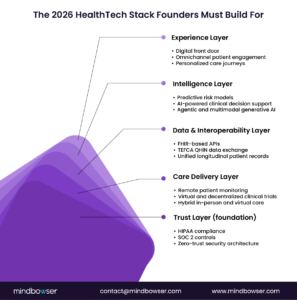
Three pillars are driving this transformation in 2026:
Technology: AI, IoT, interoperable data layers, and agent-driven automation now sit inside core clinical and operational workflows, not on the edges.
Market Dynamics: Patients expect consumer-grade experiences. Providers demand ROI. Investors back platforms that show outcomes, not just adoption.
Regulatory Push: The Cures Act enforcement, TEFCA QHIN exchangesgoing live, and CMS reimbursement models are forcing real data liquidity and accountability across the ecosystem.
This blog breaks down the 10 digital healthcare trends every HealthTech founder must watch in 2026, starting with the continued shift toward predictive and preventive care models.
I. Top 10 Digital Healthcare Trends To Watch in 2026
A. The Rise of Predictive and Preventive Digital Health
How is predictive digital health transforming patient care in 2026?
Healthcare continues its shift from reactive treatment to proactive prevention, and in 2026, this shift is no longer optional. Predictive and preventive digital health tools now sit at the center of value-based care, risk contracts, and population health strategies.
B. What is Powering This Trend in 2026:
AI-driven early diagnosis tools: Machine learning models analyze longitudinal clinical data, genomics, imaging, and wearable signals to surface risk earlier. Cancer screening prompts, sepsis alerts, and chronic disease risk scores now trigger inside clinical workflows, not after the fact.
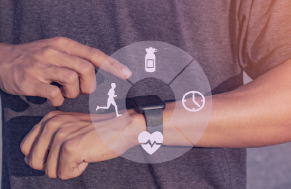
Wearables detecting chronic conditions: Devices like Apple Watch, Dexcom, and Fitbit have moved from wellness tracking to medical-grade insights. Continuous glucose monitoring, arrhythmia detection, and sleep disorder indicators allow care teams to intervene weeks earlier.
Link to value-based care: Predictive tools directly support value-based contracts by reducing avoidable admissions and ED visits. Payers and providers now expect these capabilities as table stakes, not experiments.
C. Why Founders Should Care
Founders building in 2026 must design for longitudinal data, not point solutions. Products that combine AI models, wearable integrations, and FHIR-based data access attract greater payer interest and achieve faster enterprise adoption. Predictive care is no longer a feature. It is the business model.
II. AI-Powered Clinical Decision Support Tools (CDS)
A. How is AI Improving Clinical Decision-making in 2026?
Clinicians face more data than time. In 2026, AI-powered CDS tools will help close that gap by delivering real-time insights inside the EHR, not in separate dashboards.
B. Key CDS Trends Founders Should Track:
AI assisting diagnostics and care planning: CDS platforms suggest diagnoses, flag medication conflicts, and recommend evidence-based pathways. These tools reduce cognitive load and help standardize care in complex cases.
SMART on FHIR as the default integration layer: CDS tools now embed directly into Epic, Cerner, and Athena workflows using SMART on FHIR. Clinicians access insights without leaving the chart, which drives adoption.
Earlier intervention through proactive alerts: For example, a CDS model may flag abnormal lab trends and prompt a screening six months earlier than traditional protocols.
C. Why Founders Should Care
In 2026, CDS credibility depends on explainability, FHIR compatibility, and workflow fit. Founders who prioritize transparent AI models and native EHR integration gain provider trust faster. CDS is no longer a differentiator. It is expected.
III. Patient Centered Digital Experience
A. How Are Digital Experiences Reshaping Patient Engagement in 2026?
Patients now expect healthcare to mirror the rest of their digital experience. In 2026, patient experience directly impacts retention, outcomes, and reimbursement.
B. Key Experience Trends Shaping Care Delivery:
Digital front door platforms: Self-scheduling, digital intake, virtual check-ins, and real-time visit updates reduce administrative friction and improve access.
True omnichannel engagement: Care communication now spans mobile apps, SMS, email, voice, and portals. Patients choose how and when they engage.
Personalized journeys at scale: Algorithms tailor education, reminders, and follow-ups based on patient behavior and risk profiles, improving adherence.
C. Why Founders Should Care
Founders building care platforms in 2026 must treat UX as clinical infrastructure. Accessibility, multilingual support, and seamless backend integration drive adoption. Consumer-grade experience without clinical compromise wins.
IV. Decentralized and Virtual Clinical Trials
A. How Are Clinical Trials Evolving in 2026?
Clinical research continues its shift away from site-centric models. In 2026, decentralized and virtual trials expand access, cut costs, and improve retention.
B. What is Driving This Change:
Remote trial participation platforms: Digital consent, virtual recruitment, and remote engagement platforms simplify trial operations and expand reach.
Real-world evidence via wearables and apps: Continuous data from connected devices provides deeper insight into treatment effectiveness outside controlled environments.
Regulatory momentum for decentralized models: Regulators increasingly support real-world evidence and remote data collection, reducing friction for sponsors.
C. Why Founders Should Care
There is growing demand for platforms that combine compliance, patient experience, and data integrity. Founders who solve for usability and regulatory rigor gain traction with sponsors and CROs alike.
Is Your HealthTech Solution Aligned With 2026 Digital Healthcare Trends?
Sustained investor and employer demand:Digital therapy, CBT-based programs, and asynchronous counseling platforms continue to attract funding when outcomes are measurable.
Guided therapy and AI-supported care models: Chatbots now support structured therapy, journaling, emotion tracking, and escalation workflows while keeping clinicians in the loop.
Expansion across workplaces and education systems: Employers, universities, and public health programs increasingly deploy digital behavioral health tools at scale.
The space is crowded, but opportunity remains. Products that serve underserved populations, condition-specific needs, or integrate deeply with payer workflows stand out. HIPAA compliance, SOC 2 readiness, and clinical validation are no longer optional. They are expected.
VI. Interoperability and FHIR-Based Integrations
A. Why is Interoperability Mission-critical in Digital Healthcare for 2026?
Data locked in silos slows care and kills scale. In 2026, interoperability is a market entry requirement, not a roadmap item. With TEFCA QHIN exchanges operational in 2026, health data can now move across networks at a national scale.
B. Key Forces Driving This Shift:
Regulatory enforcement is real now: The 21st Century Cures Act and TEFCA require data sharing, patient access, and standardized exchange. With QHINs live, interoperability is no longer theoretical.
Unified longitudinal patient records: FHIR-based architectures enable platforms to integrate EHR data, claims, lab results, and device data into a single patient view, enabling analytics and personalization.
C. Why Founders Should Care
Founders who design FHIR first products ship faster and sell faster. Interoperability opens doors to enterprise buyers, payer partnerships, and nationwide scale. In 2026, FHIR is not a feature. It is the foundation.
VII. Remote Patient Monitoring (RPM) Becomes Revenue-Driven
A. How is RPM Evolving in 2026?
Remote Patient Monitoringhas matured into a clinically and financially validated model. In 2026, RPM success depends on outcomes and reimbursement, not device counts.
B. What Has Changed:
Predictive alerts replace passive monitoring: RPM platforms now analyze continuous streams of vital signs to flag deterioration early, enabling care teams to intervene before escalation.
Medical-grade devices at home: FDA-cleared wearables and sensors capture reliable data for glucose, ECG, respiratory rate, and temperature outside clinical settings.
Clear reimbursement pathways: CMS reimburses $50 or more per 30-day period per patient, making RPM financially viable for providers when tied to outcomes.
C. What Founders Should Focus On
Founders should build RPM platforms that integrate with EHRs, support clinical workflows, and prove ROI. The winners in 2026 turn data into action and scale reimbursement.
VIII. Generative AI Moves Toward Agentic and Multimodal Systems
A. How is Generative AI Reshaping Healthcare Workflows in 2026?
Generative AI has moved beyond single-task automation. In 2026, healthcare platforms deploy agentic AI and multimodal models that reason across text, voice, images, and structured data.
B. Key Applications Gaining Traction:
Clinical documentation and summarization: AI agents generate notes, summarize encounters, and draft discharge plans while preserving audit trails.
Patient communication at scale: Multimodal assistants explain diagnoses, answer questions, and follow up across channels in plain language.
Operational automation: Agent-based systems support coding, billing, prior authorization, and care coordination with human oversight.
C. Why Founders Should Care
AI credibility now depends on governance. Founders must design human-in-the-loop workflows, explainable outputs, and HIPAA-compliant data handling. Agentic AI is powerful, but trust is the differentiator.
IX. Privacy, Security, and Patient Data Ownership
A. Why Does Security Define Digital Health Winners in 2026?
As data volume grows, trust becomes currency. Security posture directly influences buyer decisions, partnerships, and brand survival.
B. Key Developments Shaping This Trend:
Beyond baseline compliance: HIPAA and GDPR compliance is expected. Platforms now differentiate through audit logs, consent controls, and data minimization.
Zero-trust architectures: Every access request is authenticated and logged, reducing the risk of breaches and insider threats.
Patient-controlled data access: Consent-driven models give patients visibility and control over how their data is used and why.
C. Why Founders Should Care
Security must be designed in, not bolted on. Founders who invest early in privacy, encryption, and access governance win enterprise trust and shorten sales cycles.
X. Outcome-Based Business Models Take Over
A. Why Are Outcomes Driving Revenue Models in 2026?
Healthcare buyers no longer pay for tools. They pay for results. Outcome-based pricing shapes how digital health companies grow.
B. Key Drivers of This Shift:
Revenue tied to clinical impact: Pricing models link fees to reduced admissions, improved adherence, or faster recovery.
Investors focus on measurable value: Capital flows toward platforms that prove long-term outcomes, not short-term usage.
Closer payer provider alignment: Shared savings and bundled payment models reward platforms that enable measurable improvement.
C. Why Founders Should Care
Design pricing around outcomes from the start. Build evidence through pilots, real-world data, and payer collaboration. In 2026, proof beats promises.
Conclusion
Digital healthcare is no longer about experimentation. In 2026, it is about execution at scale, with trust built in. From predictive care and AI-driven workflows to FHIR-based interoperability and outcome-aligned business models, the market now rewards founders who build for reality, not hype.
The strongest platforms align regulatory momentum, such as Cures Act enforcement, TEFCA QHIN exchanges now live, and clearer CMS reimbursement with technology enablers like agentic AI, FHIR APIs, medical-grade wearables, and RPM.
Add rising market pressure as providers demand ROI, payers demand outcomes, and patients expect simple, connected experiences. For HealthTech founders, 2026 is a defining year. Winning products will reduce costs, improve outcomes, and integrate cleanly with security and compliance built in.
What are the top digital healthcare trends for 2026?
Key trends include predictive AI, remote patient monitoring, generative AI in clinical workflows, FHIR-based integration, and outcome-based models.
How is generative AI used in healthcare?
Generative AI supports chart summarization, coding, and patient communication—saving time and reducing burnout in clinical workflows.
Why is FHIR important in digital healthcare?
FHIR ensures healthcare apps can access and share patient data securely with EHR systems, promoting better interoperability and care coordination.
What does Value-as-a-Service mean in healthcare?
Value-as-a-Service (VaaS) ties revenue to patient outcomes, not just software usage, aligning startups with payers and value-based care models.
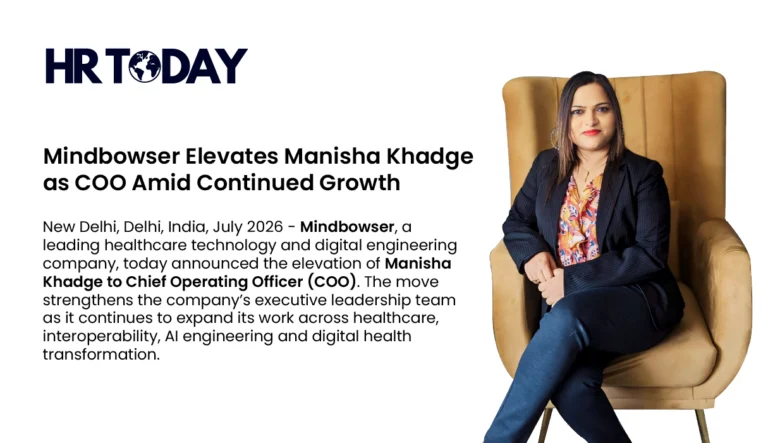
Manisha Khadge is CMO at Mindbowser. She brings nearly two decades of B2B SaaS and IT services marketing leadership, with deep expertise in healthcare marketing strategy, brand positioning, and go-to-market execution. Her career spans enterprise SaaS firms across fintech, legal tech, travel tech, financial services, and healthcare before narrowing her focus to healthcare technology as CMO at Mindbowser.
She is a LinkedIn Top Voice, recognized as one of Asia’s 100 Women Power Leaders 2023, and an active podcast host on DEI and women in healthcare leadership.

















 BLOGS
BLOGS  NEWSROOM
  CASE STUDIES
  WEBINARS
  PODCASTS
  ASSET HUB
  EVENT CALENDAR